Everything is simulated
The city doesn't wait for you to log in
A day passes every eight real hours. Weather rolls across the map. Streetlights come on at dusk because a power grid decided they should. Shopkeepers walk home and go to bed. None of it is on a script that starts when you arrive.
Generators, substations, fuses. Storms fault them. Blackouts are simulated, not announced. The lights just go out, and the ATM stops working.
Rooms have odours and noises that travel. A gunshot next door is something you hear. So is somebody who hasn't washed.
Familiarity and warmth, tracked per person. The barkeep stops greeting you like a stranger. Some doors only open for someone known.
The pan tracks its own contents, heat and doneness. Chop, season, stir, flip, taste. Timing is a real variable, and a dish you invent is yours to name and sell.
Condition degrades with use, not with the clock. Repair it well and it comes back tougher. Ignore it and it's destroyed.
Filth builds up where you live, and nobody comes to deal with it. A place you own is yours to clean. That's why you'd carry a mop.
The storyline you argue with
Nine orders. Two questions. Pick a side or don't.
Something much smarter than people built this place and may still be running it. Everyone in Coldwater Basin has a theory about what to do next, and the theories don't get along. Standing with an order is something you keep being. Stop showing up and you drift back to being nobody in particular. Five of the nine will actually take you in today, and each of them has a real discipline behind it: bought chrome, survived mutation, or a lifetime's training that leaves no mark on you at all. The rest have creeds and a seat on the chart, and you can read them but not yet join them.
Finish what it started
The tools were never the mistake. Engineer the next humanity, in steel, if that's what it takes.
Adapt, don't preserve
Mutation isn't a wound to be cured. It's the next draft of the species, already being written in the wastes.
The body was the limit
Evolution was never meant to be waited for, and the future isn't in the ruins of the past anyway.
The city belongs to its people
No steel salvation. No mutant rebirth. Take it back, or walk away and build something honest.
Burn a bridge and, given long enough, you can walk back across it. A bad early decision shouldn't close off a quarter of the game forever.
Part three goes deep on this: the two questions every order is answering, all nine of them side by side, where they're stationed, and exactly what siding with one does to your prices, your doors and your body.
Become something
Mutant, machine, or master of the trade
Three ways to stop being an ordinary body, and the first two are a genuine fork in the road.
Radiation is patient. Let it build and it rewrites you: permanent mutations with real benefits and real costs. Free, random, and not your decision once you've let it get that far.
Cybernetics are the opposite: chosen, paid for, slot-limited, removable. Subdermal weave is armour under the skin. A cortical backup means dying is a rollback.
26 skills, no experience bar, no level gates. You get better at picking locks by picking locks. You become whatever you keep doing.
You can't be both. Your first cybernetic install burns off every mutation you have, and chrome can't mutate afterward. The human-path orders will hold it against you.
And then there's a flight simulator in it
Aircraft you actually fly
A continuous energy simulation with stalls that have teeth, per-airframe fuel, weather you can see coming, and a cockpit full of instruments that mean something. Take off, get lost, run cargo, get shot at.
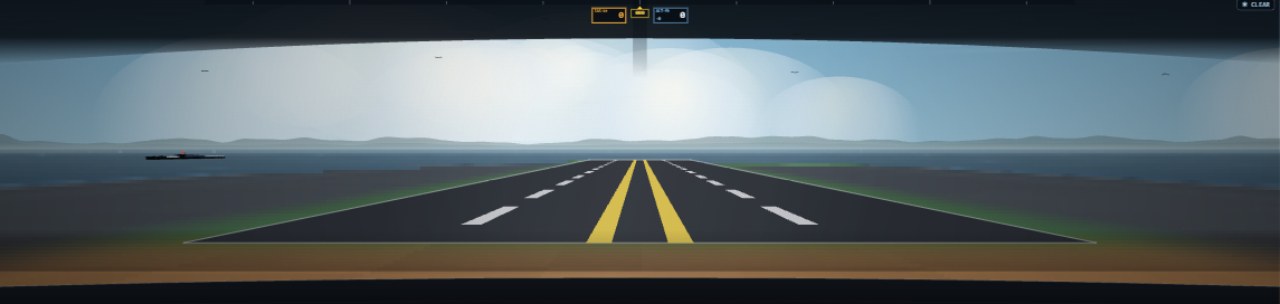
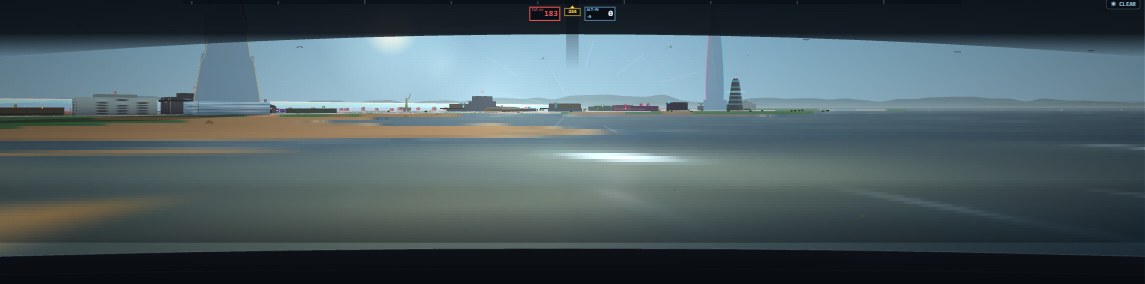
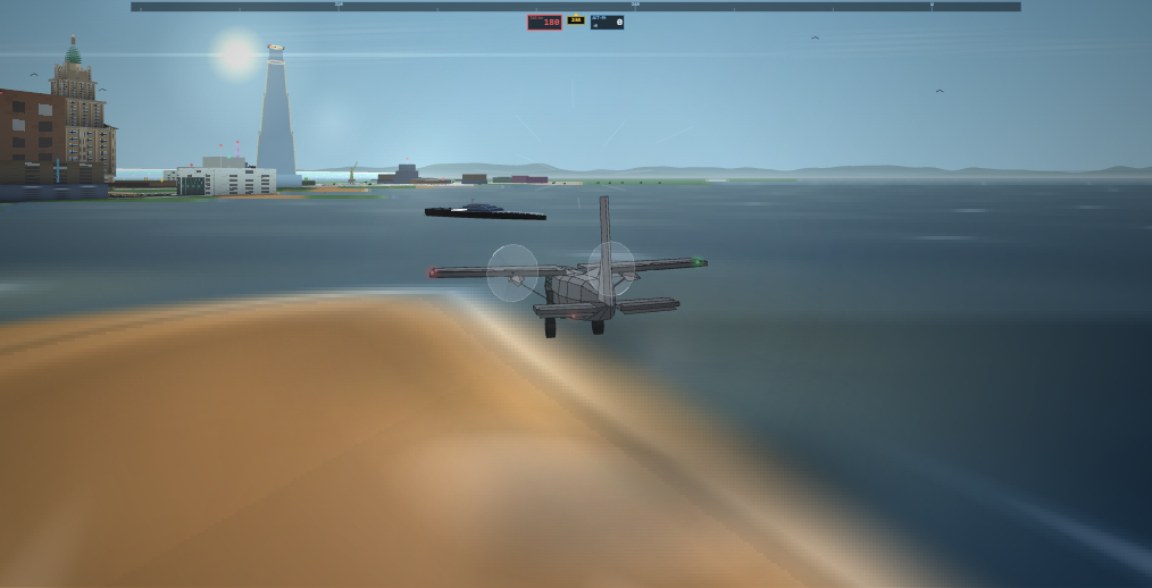
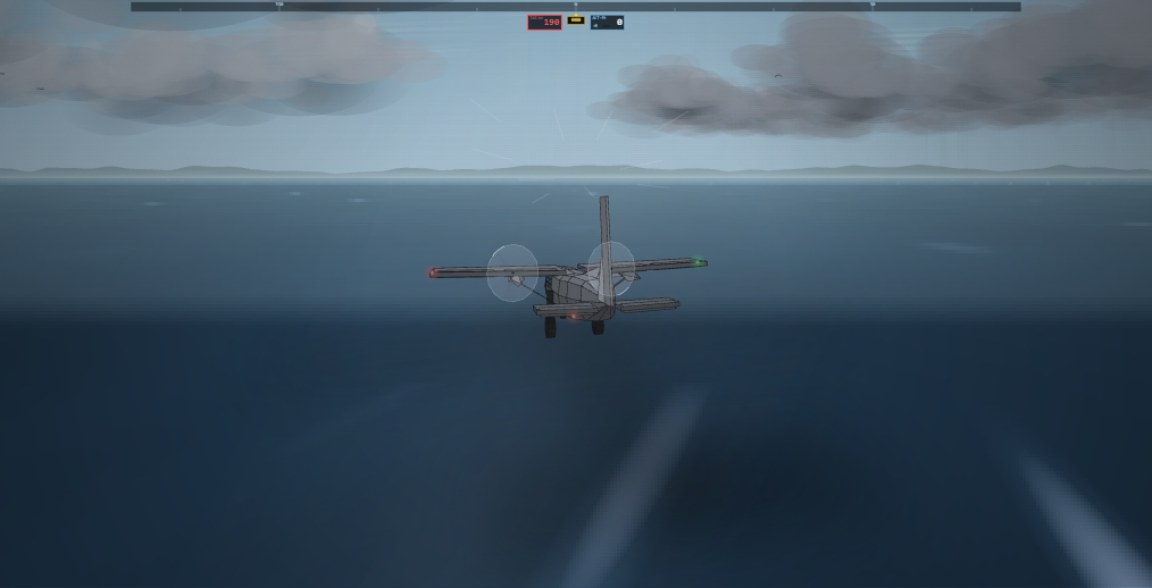
- Cargo, medevac, VIP charter, survey, relief, and the contracts that don't file a flight plan.
- Air-to-air and air-to-ground: guns, missiles, SAM sites that resent you.
- A licence you have to earn, a hangar to keep your fleet in, and insurance for when you don't.
- Break-up and crash cameras, because the game wants to show you exactly how it ended.
Things to do that aren't violence
Sit down and play something
Real games, fully implemented, with other people at the table.
Complete legal rules (castling, en passant, promotion, repetition), verified against known move counts. Rendered as an isometric neon set where the pieces stand up off the tilted board.
Seats, blinds, a host who deals, spectators behind you. Play it on the felt, or have the whole table called out to you in words.
Slots and a poker room at The Lucky Bastard, for when you've decided money is a burden.
Mint yourself at a terminal and become a card someone else can pull out of a foil sleeve. Packs roll when you open them, never when you buy them.
Cast and wait, or work a deposit. Both are postures: start them and they keep going while you watch the water.
Sit at the upright and play it, key by key, on your own keyboard. The room hears what you play. No skill check. The skill is your hands.
Make a living, or make a problem
From counting rats to running the block
Honest work
A rotating job board of small legal gigs: deliver a parcel, sweep a lot, count the rats, sit in a seat somebody needs filled. Steady shifts. Fishing and scavenging for what you can carry.
Your own shop
Buy the deed to a storefront and it's yours: set the wares, order stock, hire and sack staff, work the till, pull the shutters at night. Rename it something worse.
Your own flat
Rent a unit, lock it, upgrade the lock before somebody picks it. Sleep safe, store your things, and deal with your own mess.
Or run a corporation
A corp is a faction with an owner, a treasury, members and territory, and territory is a tug-of-war you can lose. Five levers of influence, and a war phase for when influence stops being enough.
Protection rackets. Control a zone and you can shake down the NPC shops in it for a cut of the take. Every shop remembers how afraid it is of you, and the racket fights the safecrackers over the same pot.
The other economy
A whole chemistry set, and a market for it
Taking them
Timed effects that ramp and fade. Addiction rolls, tolerance, withdrawal, overdose. Taking anything is an act you have to stay in the room for.
The dissociatives take you out of the room entirely: your mind walks a handful of rooms that assemble themselves for the trip and dissolve when it ends, while your body stays exactly where you dropped it, in a real room, lootable and killable by anyone who wanders past.
Making and moving them
Synthesis and splicing on a real bench, behind a cabinet built to not look like a lab. Raw supply chains. Dealers to sell through, and a street price that isn't fixed.
All of it is witnessed by somebody eventually. The city runs a wanted level, police who will take you alive at the top of it, a jail, an evidence locker, and a cell door that can be hacked.
Weather that's trying to kill you
Get cold. Get wet. Get dissolved.
Severity is a live number, and how lethal it gets depends on your gear: weather will kill you, but only if you went out unprepared. The right coat turns a killer into an inconvenience.
Body temperature is tracked. Soaked clothing pulls heat out of you faster. Fall in the water and get out slower than you went in.
Rain wets your clothes layer by layer, and wet layers stop working. Dry off or keep paying for it.
A named hero event. It eats gear and skin. Being indoors helps; being indoors without a roof over the right room does not.
Never blocks you. It just charges you stamina for every step outdoors until you're too tired to be somewhere dangerous.
An EMP that drops the whole city grid. Lights, ATMs, televisions, cyberware. The aftermath persists.
A blacked-out building has no heating, so indoors is a different problem rather than a solved one.
There's television, and it's real television
Shows assembled live, performed by actual NPCs
Every set in the world is furniture on the power grid. Tune it and you get a show built fresh from what's happening in the city that day, acted by people who had to turn up to work.
A host and a sidekick who commute in on schedule. A guest NPC renamed to a new persona each day, who appears somewhere in the world and walks across the map to the studio, and if they don't make it, there's an authored no-show segment instead of an interview with furniture.
Stories sourced from real events in the world, padded out with wire copy and tabloid filler, read by fixed outlet bylines. The meteorologist works off the same seven-day forecast you do.
Deadball on Mondays, Wednesdays and Fridays. Cluster Puck on Tuesdays, Thursdays and Sundays. Real leagues, real standings, a postseason, a score bug, and a bookmaker who'll take your money on it.
Stand in the studio when a round opens and you're a contestant, answering on air, citywide, for money. One asks what things are worth. The other asks what you know about the city.
There are also morning shows, sermons, films that play in real time so you can join one already running, pirate broadcasts, and a bystander line that leaks in when somebody else is watching a set in the same room as you.
While you're logged out
The world lives on without you
Log out for a week. The city doesn't pause, wait, or reset.
- Your rent falls due on the city calendar whether you're there to pay it or not.
- Your body sleeps where you left it. Hunger, thirst and radiation hold until you're back. Log off in a bed and you wake rested.
- Weather rolls on. The storm you were warned about happens on schedule, with you or without.
- NPCs work their shifts, commute home, go to bed, and slowly forget who you were.
- Leagues play their fixtures and the standings move without a single player watching.
- Your corpse is still lying there if that's how you left. Somebody has probably been through it.
A world that only happens while you're looking at it is a ride. This one is a place you visit.